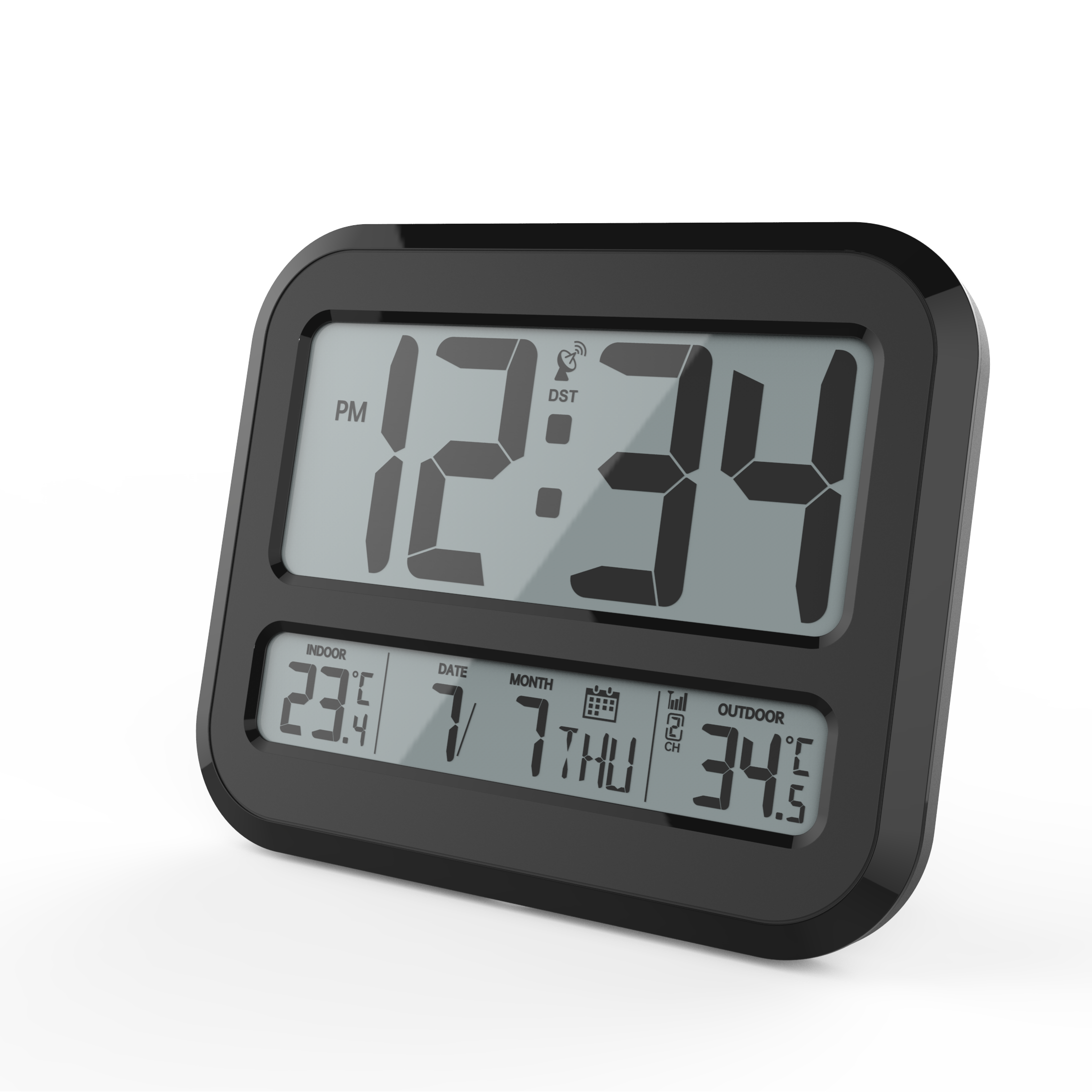
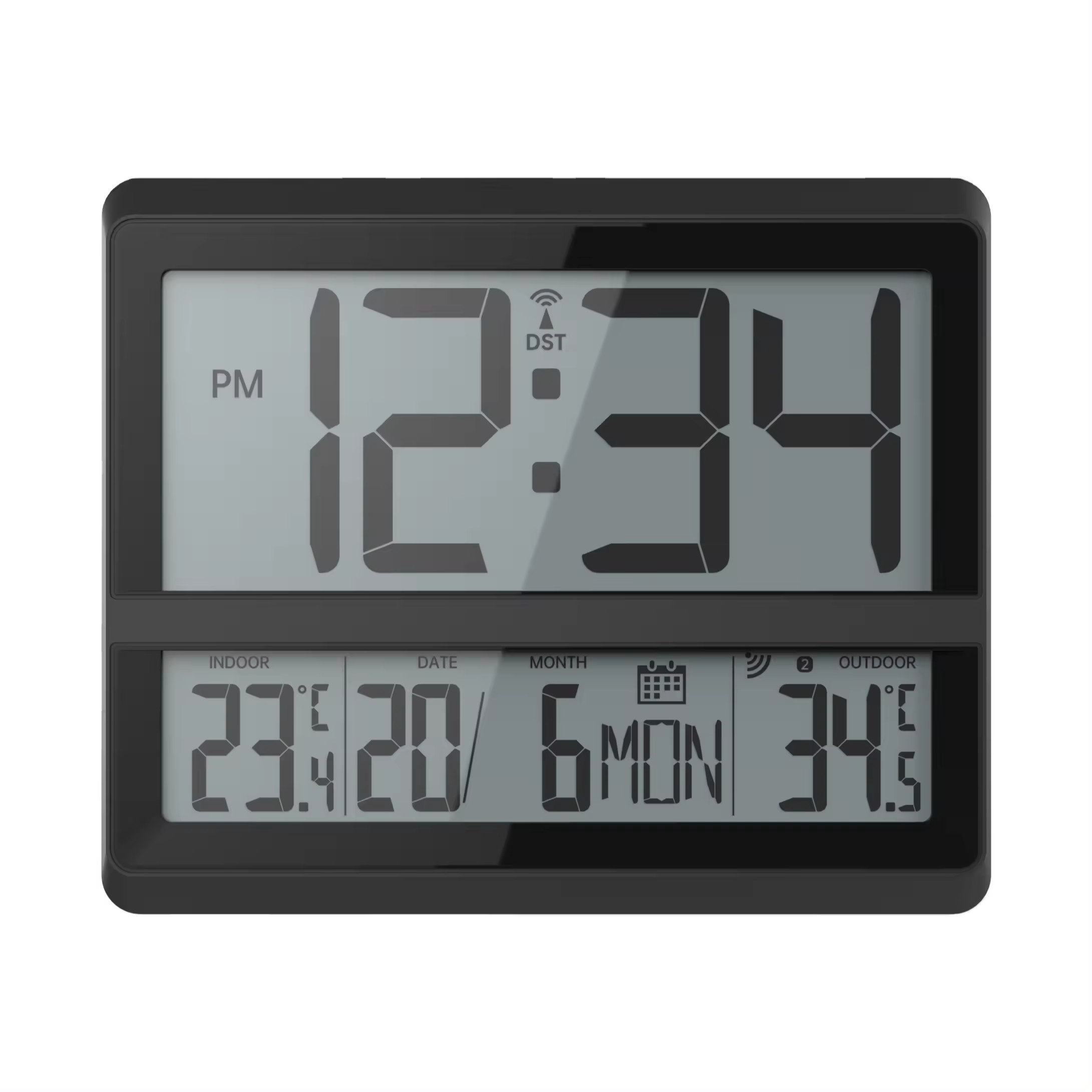
A few years ago, the "smart everything" movement promised your clock would become a tiny computer. It would hop on your Wi-Fi, sync with your phone, push your calendar, maybe read your podcast aloud. Some of that is genuinely useful. But a funny thing happened on the way to the futuristic bedroom: a lot of people went back to a plain clock.
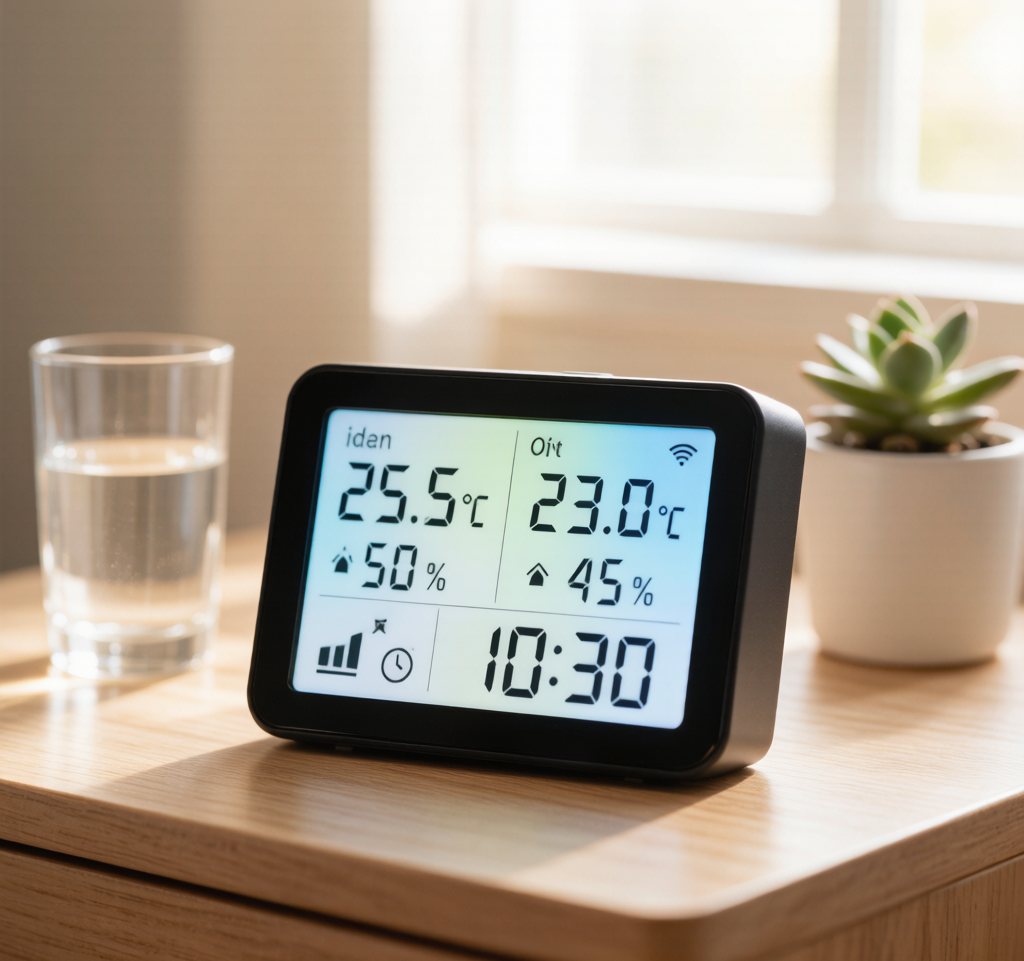
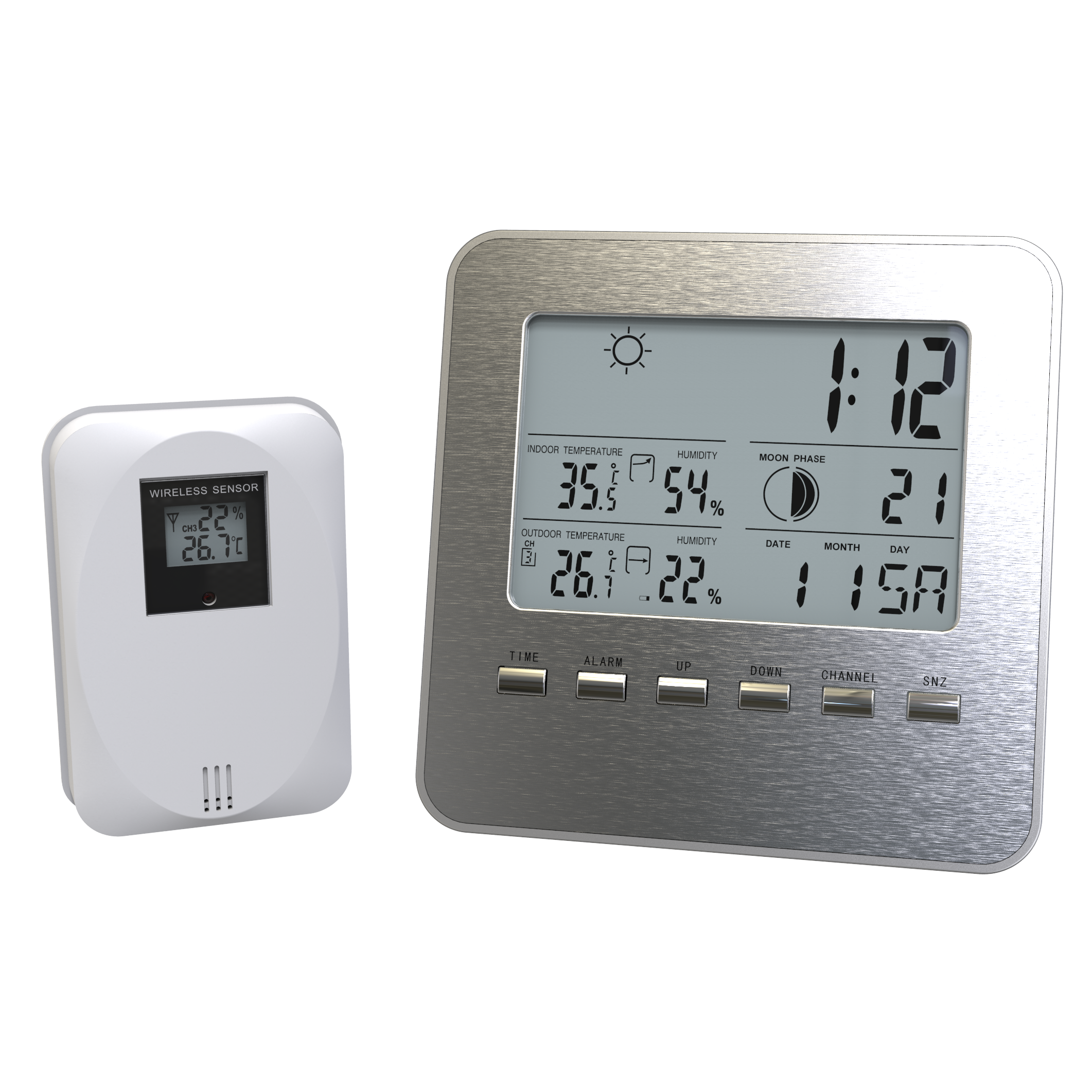
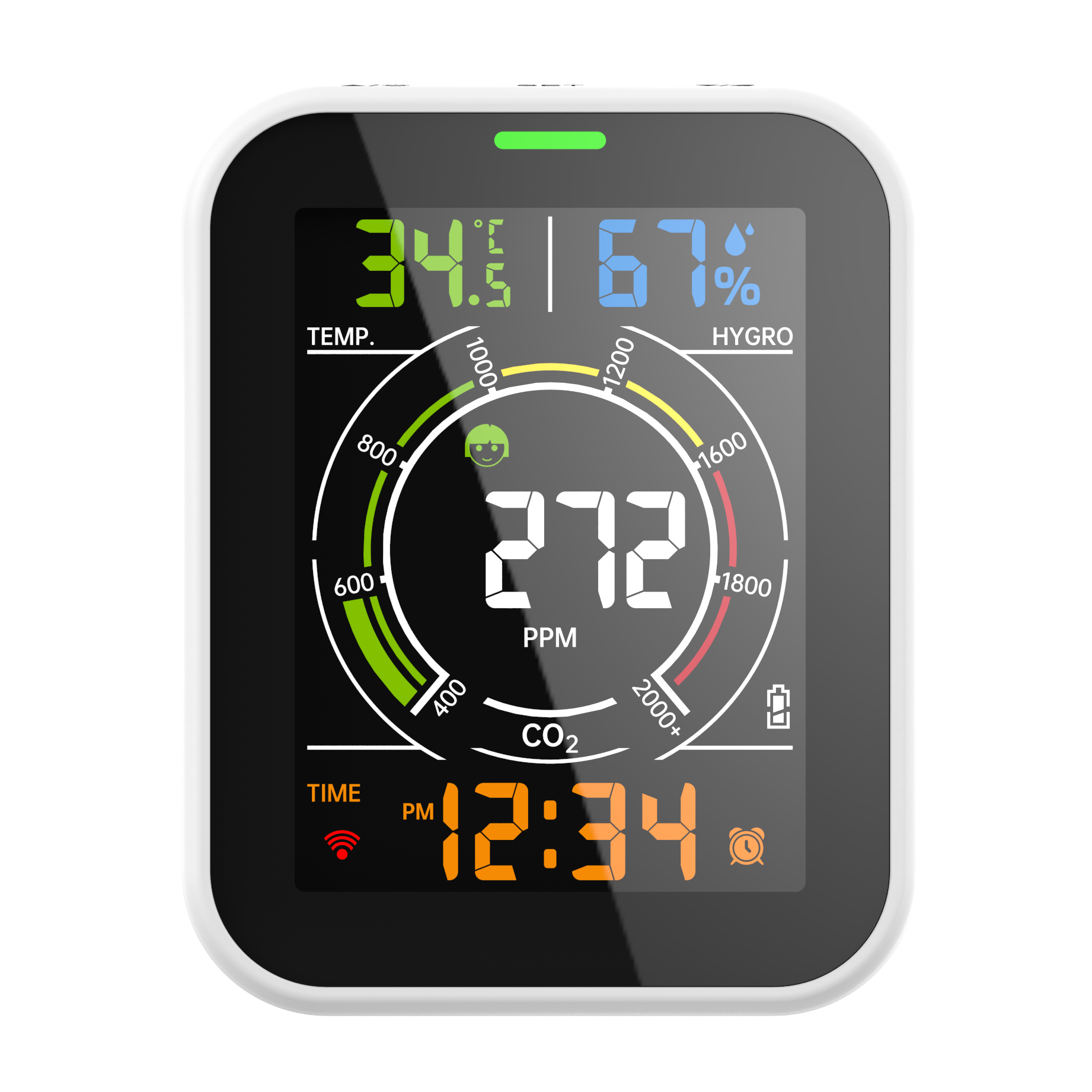
Not a flip-phone-level throwback — a better kind of simple. The kind of clock that shows you the time, the indoor and outdoor temperature, the humidity, and tomorrow's weather forecast, all on one screen you can read from across the room. No app. No account. No firmware update at 2 a.m.
If you make or sell consumer electronics, this isn't a niche quirk. It's a real shift in what buyers ask for. Here's why the "non-smart" clock — built around two workhorse products, the digital clock with indoor/outdoor temperature and humidity and the weather-forecasting weather station — is quietly winning, and why that matters for anyone in the category.
The smart-clock fatigue is real
Think about the last "smart" gadget you set up. You downloaded an app, created a login, waited for it to find your network, typed the Wi-Fi password twice, and hoped the firmware didn't choke. For a phone, fine. For a clock on your nightstand? That friction starts to feel silly.
The appeal of a simpler device is exactly the absence of all that:
It works the moment you plug it in or drop in batteries.
It doesn't need your home network to tell you the time.
When the internet goes down, it still tells you it's 7:00 and that it's 18°C outside.
That last point landed hard during the past few years of outages and flaky connections. People noticed the "dumb" clock in the kitchen kept ticking while the smart one sat there, blank, waiting to reconnect.
So what does a "simple" clock actually show?
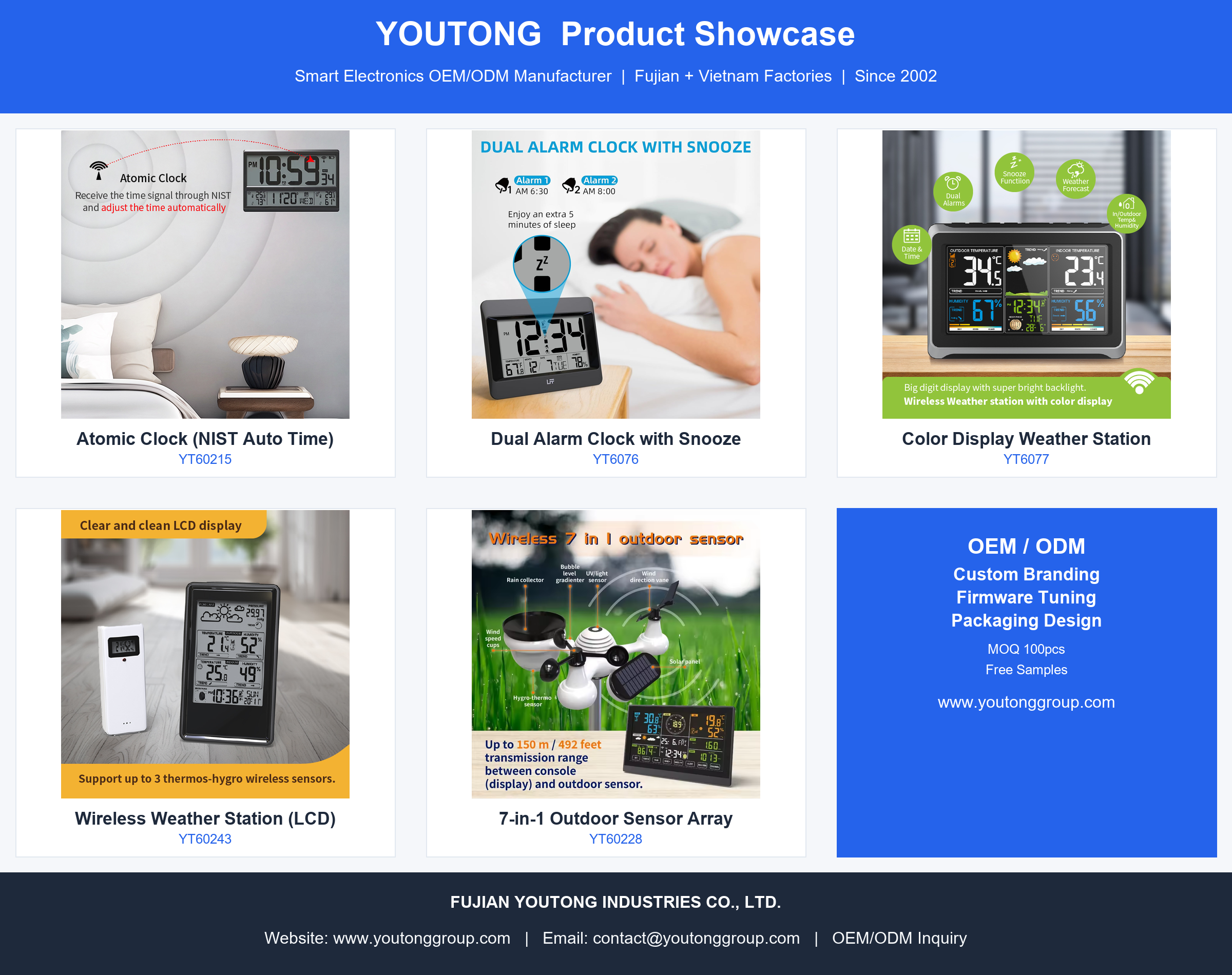
Quite a lot, it turns out. The category has split into two product types that together cover almost every household need:
Neither needs the internet to do its job. The forecast is generated locally from the sensor's own pressure readings, not pulled from a weather API. That's the whole point: the information lives in the device, not in the cloud.
5 reasons people are choosing these over smart displays
Who actually buys these (and why it matters for you)
If you're in the business of making or importing these, the buyer profile is broader than "people who hate tech":
Households with older adults. Big digits, no setup, no app — exactly what a less tech-comfortable user wants. The outdoor temperature alone helps someone decide whether to grab a coat.
Parents and kids' rooms. A clock that shows room temperature and humidity quietly supports comfort and sleep, no smartphone required.
Coastal, humid, or swing-temperature regions. Where the "feels like" gap between the official forecast and your backyard is huge, a local reading settles the "do I need a jacket?" argument instantly.
Offices, workshops, and kitchens. A wall-mounted unit that shows time plus conditions at a glance keeps a space functional without another screen vying for attention.
Gift buyers. These make a safe, useful, non-intrusive present — which is why they move well around the holidays.
How to tell a good one from a forgettable one
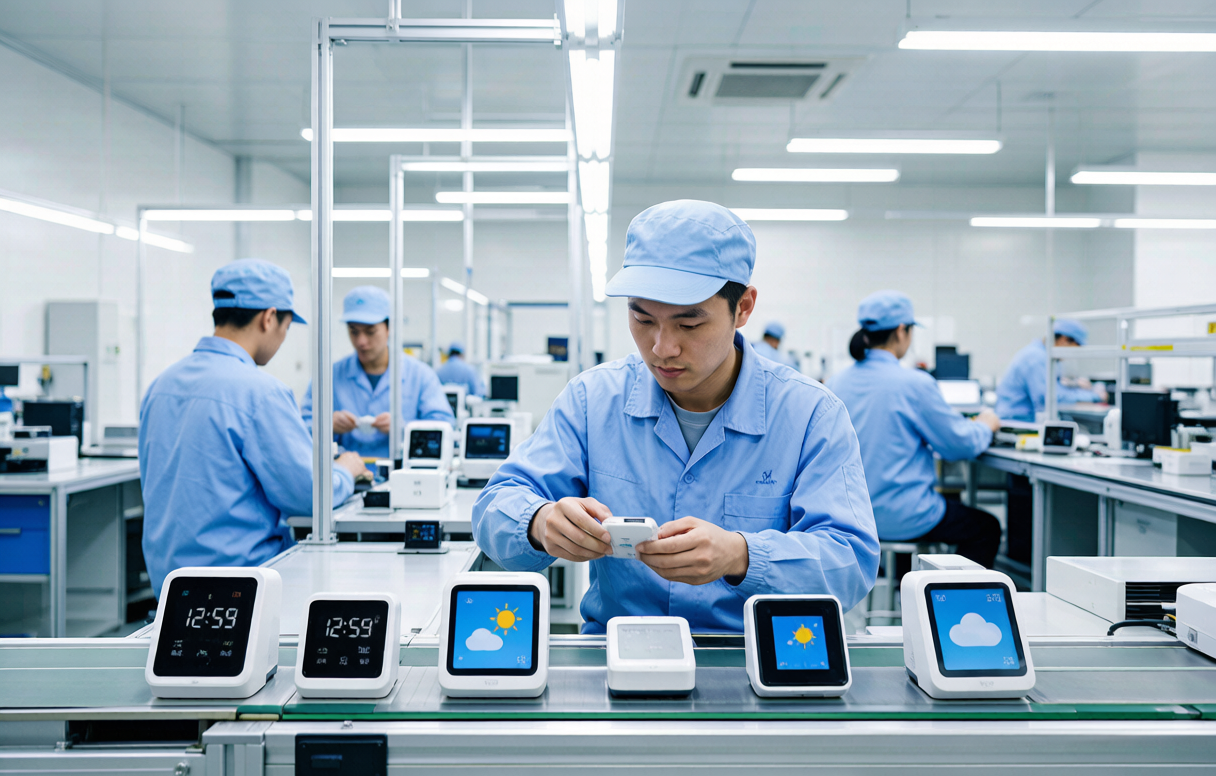
From the manufacturing side, a few things separate clocks people keep from clocks people return:
Sensor range and reliability. The outdoor sensor should hold a stable link at a reasonable distance (many spec around 60 m / 200 ft line-of-sight). Dropouts are the #1 complaint.
Display readability. Large, high-contrast digits visible from across the room, with adjustable brightness for nighttime.
Stable, separated temperature sensing. The display itself generates heat; good units isolate the sensor so the "indoor" reading isn't thrown off by the screen.
Power flexibility. Plug-in with battery backup means it survives a blackout and stays portable.
Comfort and forecast accuracy. Barometric trend arrows and a comfort indicator add genuine value without needing connectivity.
A note on the source
We're YOUTONG (Fujian Youtong Industries), and we've been building consumer electronics — including digital clocks and weather stations — since 2002, from production bases in Fujian, China and Vietnam. The shift we're describing isn't theoretical to us; it's what we hear from the brands and retailers we manufacture for. When a buyer asks for "simple, reliable, no-app," this is the product class they mean.
For brands, importers, and retailers, that's the opportunity: a category with steady, year-round demand, strong gift-season spikes, and a clear story customers already understand. We support full OEM/ODM — from appearance and firmware to packaging — so a private-label version of these clocks can reach shelves without reinventing the wheel.
FAQs
Q1: Do these clocks need Wi-Fi or an app to work? No. Digital clocks with indoor/outdoor sensors and weather-forecasting stations read conditions from their own sensors and show everything on the built-in display. Wi-Fi is not required for the core functions.
Q2: How does a weather station forecast without the internet? It measures barometric pressure locally and detects trends — rising pressure usually means clearing, falling pressure often means incoming rain. The forecast is calculated on-device from those readings.
Q3: Will the time be accurate after a power outage? Most use radio-controlled (atomic) timekeeping that auto-syncs and adjusts for daylight saving, so they reset themselves correctly once power returns.
Q4: How far can the outdoor sensor be from the display? It depends on the model, but many specify around 60 meters / 200 feet in open line-of-sight. Walls and metal reduce that range.
Q5: Are these good clocks for elderly users or a child's room? Yes. Large readable digits, no app setup, and an at-a-glance layout make them practical for older adults, while the room temperature/humidity readout is useful in nurseries and kids' rooms.
Q6: Can these be customized for a private-label brand? Yes. Manufacturers like YOUTONG offer OEM/ODM for appearance, firmware, and packaging, so retailers can sell them under their own brand.
Conclusion
The "dumb" clock comeback isn't about rejecting technology — it's about putting technology exactly where it helps and nowhere it gets in the way. One screen, the time and the weather you actually care about, no Wi-Fi, no account, no update at 2 a.m. For buyers, that's calmer mornings. For brands and importers, it's a proven, in-demand category worth stocking.
If you're sourcing digital clocks with indoor/outdoor temperature and humidity, or weather-forecasting weather stations, talk to YOUTONG — two decades of Fujian + Vietnam manufacturing, full OEM/ODM support, and the kind of "simple, reliable, no-app" product your customers are asking for.
Learn more: https://www.youtonggroup.com
 Hot News
2026-01-19
2026-01-16
2026-10-13
2026-10-08
2026-09-22
2026-08-13

We R&D and manufacture consumer electronics (weather forecasters, RCC clocks, thermometers, Qi chargers, DAB radios, etc.). With 40,000㎡ factory, 300+ staff, in-house R&D team, China-Vietnam source factories, 23+ years of export experience, we deliver one-stop solutions and are trusted by clients in 120+ countries.
Building 1, M9511 Industrial Park, No. 18, Majiang Road,Fuzhou,Fujian,China
Copyright © 2026 by YOUTONG GROUP Privacy Policy
 EN
EN